



Thematic ETFs
See More

Macro Cycle
See More



Macro Linkages

CNY Fluctuation and Equipment Import Costs: The Sensitivity Test
Currency movements can look distant from the factory floor, but for China's semiconductor industry, changes in the value of the Chinese yuan can quickly become a practical cost issue. Semiconductor manufacturing depends on sophisticated equipment, materials, components, software, and technical services sourced from a global supply chain.

VIX Spikes and Semi Stock Defense: The Portfolio Strategy
Semiconductor stocks have become one of the most important expressions of the global technology cycle, but their strong growth characteristics also make them particularly sensitive to changes in financial-market conditions. When volatility suddenly rises, semiconductor equities can experience sharp price movements even when the underlying business outlook has not changed materially.

Copper and Palladium Prices: The Semi Manufacturing Cost Transmission
Semiconductor manufacturing is often described through advanced lithography, wafer fabrication, packaging technology, and massive investments in computing infrastructure. Yet beneath these sophisticated processes lies a less glamorous but highly important layer: raw materials and industrial inputs. Copper and palladium are two commodities that can provide useful signals about this underlying cost structure.
HBM Memory
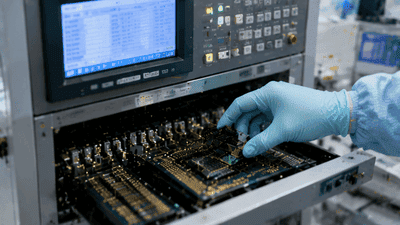
Incremental Demand for HBM Test and Burn-in Equipment – A Quantified Forecast
As High-Bandwidth Memory (HBM) moves from niche to mainstream across AI, HPC, and advanced graphics, test and burn-in equipment emerges as a critical bottleneck. HBM modules require more extensive, higher-fidelity testing than commodity DRAM: multi-die functional tests, high-speed channel validation, thermal stress profiles, and system-level burn-in under representative accelerator loads.
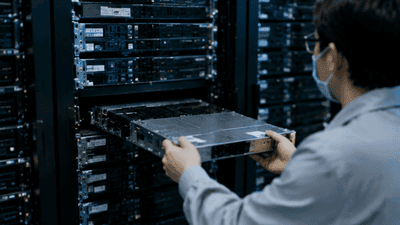
HBM’s Value Share Per AI Server Unit Continues to Rise
High-Bandwidth Memory (HBM) has steadily transitioned from a niche premium to a core system-level enabler for modern AI servers. As models grow larger and throughput demands intensify, designers increasingly attach value to bandwidth, density, and energy efficiency that HBM uniquely provides.

HBM4 Mass Production Kickoff: The 2026 Tech Roadmap Showdown Among 3 Memory Giants
By 2026, high bandwidth memory (HBM) has moved from a niche enabler of premium accelerators to a central battleground in the AI and advanced computing industry. The kickoff of HBM4 mass production marks a decisive escalation: the three leading memory giants are no longer just supplying components; they are effectively shaping the performance envelope and cost structure of the next generation of AI chips.
ETFs
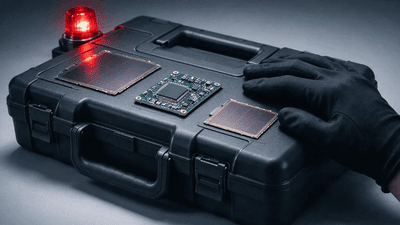
Inverse Semi ETF Effectiveness: The Bear Market Tool Review
Semiconductor exchange-traded funds are usually associated with bullish participation in the technology cycle. Investors buy them to gain exposure to chip designers, memory manufacturers, foundries, equipment suppliers, and other companies expected to benefit from rising semiconductor demand. Yet the same industry can experience abrupt downturns when inventories rise, capital expenditure expectations weaken, technology cycles mature, or investor enthusiasm moves too far ahead of fundamentals. In those periods, an inverse semiconductor ETF can become an important tactical tool.
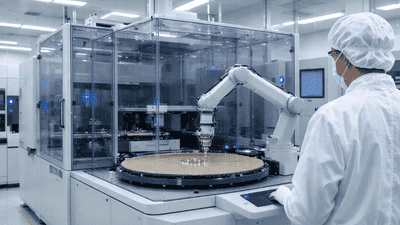
Smart Beta Semi ETFs: The Factor Tilt Performance
Semiconductor exchange-traded funds have traditionally been associated with market-capitalization weighting, sector representation, and straightforward exposure to a basket of chip companies. That model remains effective for investors seeking broad participation in the semiconductor cycle, but it does not necessarily capture the differences in quality, valuation, momentum, volatility, or profitability that exist within the industry. Smart beta semiconductor ETFs attempt to address this gap by introducing systematic factor tilts into the portfolio construction process.

Semi ETF Options Hedging: The Put Protection Cost-Benefit
Semiconductor ETFs offer investors an efficient way to participate in the long-term growth of chip manufacturing, artificial intelligence infrastructure, memory, advanced packaging, and data-center investment. The same concentration of opportunity, however, can create significant downside risk. Semiconductor stocks can move sharply when earnings expectations change, memory prices turn, capital expenditure forecasts weaken, or technology valuations reset. For investors who want to maintain a long position while reducing the impact of a sudden decline, put options can provide a form of portfolio protection.
Compute Chips
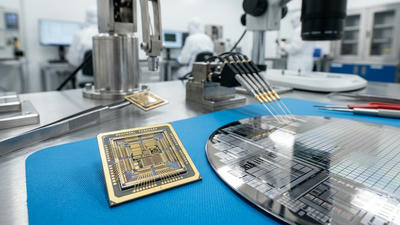
ASIC vs. GPU in 2026: Broadcom’s Custom Silicon Order Book Reveals the Shift
The AI chip market is becoming more diverse, not simply replacing one processor with another. GPUs remain valuable for programmable computing, while large customers increasingly commission custom accelerators that reflect their own workloads, infrastructure, and economics.

Inference Era Pricing: Why LPU Architecture Targets the Token Generation Bottleneck
The price of an AI response depends on more than how much arithmetic a chip can perform. It depends on how quickly the system accesses data, how efficiently it schedules requests, and whether the resulting answer arrives within the application’s time limit.
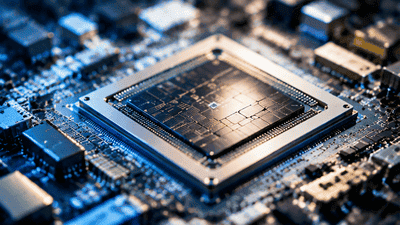
OpenAI’s Custom Chip with TSMC: The First Major LLM Company Going Silicon
OpenAI is moving deeper into the hardware beneath its models. Instead of relying exclusively on processors designed for a broad market, it is helping create silicon around the workloads that power its own products. That is a significant change in responsibility: the company is no longer only a customer of computing infrastructure, but also a participant in defining it.